Certain chemicals in common household items can release harmful compounds over time, potentially increasing cancer risk.
Ventilation, choosing safer alternatives, and proper disposal are key to minimizing exposure to these potentially carcinogenic substances.
While the evidence on specific links to cancer is mixed, taking precautions can help create a healthier home environment.
Source: NATALIA KHIMICH / Getty
Your home is supposed to be your safe space, but some of the everyday products and materials inside it could expose you to chemicals and substances that have been linked to cancer.
From the kitchen to the living room, certain household items may release potentially harmful chemicals over time, particularly when they are damaged, heated or used frequently. While exposure does not mean you will develop cancer, knowing which products may carry potential risks can help you make smarter choices about what you bring into your home and how you use it.
See the potential household items that could increase your cancer risk along with how to reduce:
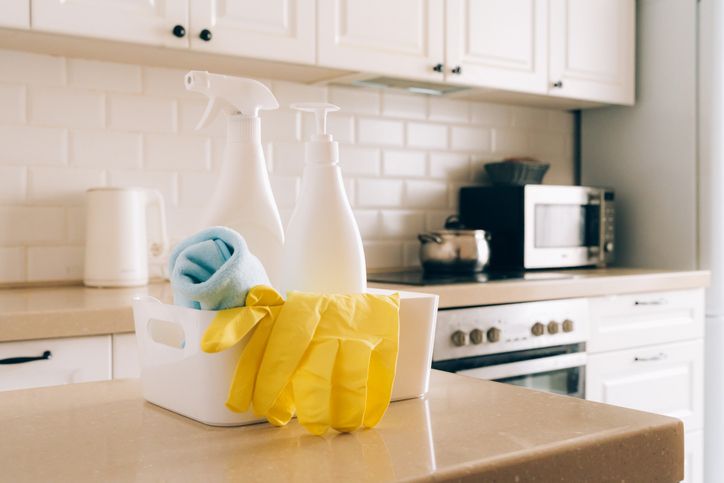
Cleaning Products
hat lemon-scented wood polish might keep your house sparkling, but what’s in it?
“Many popular cleaning products contain chemicals like formaldehyde and benzene, which have both been linked to cancer risk,” says Dr. Yu. “Products that emit volatile organic compounds (VOCs) are of particular concern.”
These include air fresheners, disinfectant sprays and most other cleaners with a strong smell.
Reduce your risk:
Go fragrance-free or choose naturally scented products.
Look for cleaning products certified by health or environmental organizations.
Open windows or turn on a fan when you clean, to avoid breathing in these products.
Batteries
You probably don’t think about your batteries until they die, but you might want to.
“Heavy metals like cadmium and lead have both been linked to cancer,” says Dr. Yu. “Rechargeable nickel-cadmium batteries pose the largest risk.”
Protect yourself by avoiding contact with old or leaking batteries – and protect the environment by always disposing of them properly.
Reduce your risk:
Always handle batteries with care, and avoid leaking batteries.
Recycle batteries at designated drop-off sites.
Choose newer battery options with fewer toxic components, like lithium-ion.
Paint
Tired of dull living room wall colors? Choose your new paint carefully.“Like cleaning products, paint can contain VOCs which linger in the air long after the paint dries. This is why ventilation is so important any time you’re painting,” says Dr. Yu.
Reduce your risk:
Choose low-VOC or VOC-free paints.
Always paint in a well-ventilated area with fans and take breaks to get fresh air.
Store leftover paint securely and dispose of old cans properly.
Scented candles
There’s nothing quite as relaxing as the soft flicker of a candle to set the mood, but is it worth it?
“Candles made from paraffin wax or containing synthetic fragrances can release benzene or toluene when burned,” says Dr. Yu. “Try not to light candles in tight spaces like a bathroom or small office, as this can increase exposure.”
Reduce your risk:
Look for candles made from natural waxes like soy or beeswax.
Choose candles scented with essential oils instead of synthetic fragrances.
Burn candles in a well-ventilated room, and don’t overdo it.
Plastic containers and bottles
You’ve probably heard warnings about plastic bottles or takeout containers, but is there cause for concern?
“The risk comes from bisphenol A (BPA), a chemical found in many of these containers and bottles,” says Dr. Yu. “Avoid reheating food in these containers, as it can cause chemicals in the plastic to leach into your food.”
Reduce your risk:
Use glass or stainless-steel containers for storing and reheating food.
Choose BPA-free products whenever possible.
Get a reusable water bottle instead of drinking from disposable, plastic bottles.
Beauty products
From hair dye to moisturizers, beauty products have recently come under scrutiny.
“These often contain chemicals like parabens and phthalates, which have been linked to cancer. This is why reading labels and choosing products with a clear ingredient list is so important,” says Dr. Yu.
Reduce your risk:
Avoid products with harmful chemicals.
Look for beauty products with clean ingredient lists.
Consider cutting back on harsh treatments like chemical hair straightening
Nonstick cookware
If you already hate cooking, here’s one more reason to avoid it. Nonstick (Teflon-coated) pans have been linked to an increased cancer risk.
“These pans are fan-favorites because they make it easy to cook foods like eggs and pancakes without sticking or requiring extra butter or oil to coat the pan. But Perfluorooctanoic acid (PFOA), a chemical used to make Teflon, has been linked to many health issues, including cancer,” says Dr. Yu.
And while newer nonstick pans are often PFOA-free, they may still contain other chemicals in the same family.
“These are sometimes called ‘forever chemicals’ because they don’t break down in the environment or the human body,” Dr. Yu adds. “Over time, they can increase the risk of liver, kidney and testicular cancers.”
Reduce your risk:
Stick to low or medium temperatures when cooking with nonstick pans.
Replace old pans, especially those with visible chips or scratches.
Choose cookware made from materials like stainless steel, cast iron or ceramic
Mold and mildew
That discoloration on your bathroom grout or shower curtain isn’t just irritating – it’s a health risk. Long-term mold exposure can cause respiratory irritation and has been linked to cancer.
“Mold produces mycotoxins, which are harmful compounds that can affect the lungs and immune system,” says Dr. Salner. “While not every type is carcinogenic, keeping your home mold-free is an important part of creating a healthy environment.”
Fix leaks quickly, use a dehumidifier in damp areas and scrub visible mold with a mixture of vinegar and water to keep it from spreading.
Plastic Cutting Board
If you’re chopping vegetables on a plastic cutting board, you may want to think twice about what could be getting into your food. Plastic cutting boards can release tiny plastic particles, especially as the surface becomes scratched and worn with repeated use.
Studies have found that cutting on plastic boards can contribute to the release of microplastics and other small plastic particles that can end up in food. While researchers are still studying exactly what these particles mean for long-term human health, exposure to certain chemicals found in plastics has raised concerns about potential health effects, including cancer.
The concern may be greater with older, heavily scratched cutting boards, where the surface has broken down over time. Some plastics can also contain additives that may have health effects depending on the type of plastic and level of exposure.
Reduce your risk:
Replace plastic cutting boards once they become heavily scratched or worn.
Consider switching to wood or bamboo cutting boards for everyday food preparation.
Use separate cutting boards for raw meat and produce to reduce the risk of cross-contamination.
Wash and thoroughly dry cutting boards after each use.
Mattresses
Some mattress manufacturers add flame retardants to prevent burning or slow the spread of fire. This may mean the mattress you’re sleeping on every night is coated in those chemicals.
Certain flame retardants contain chemicals known as volatile organic compounds (VOCs), which means they can become airborne. Some research suggests these flame retardants can interfere with hormone levels and may be associated with cancer, according to the National Institute of Environmental Health Sciences.
One pitfall of linking cancer risk with flame retardants is there aren’t reliable measures of exposures to these chemicals in people and populations, Rebbeck says. “Epidemiological studies in people are limited, and these studies either offer mixed messages or say they have no effect on cancer risk,” he adds. “But in any case, the effects are really small. I personally see no reason for people to change their behavior.”
Reduce your exposure:
Look for mattresses labeled “flame-retardant free” or made without added chemical flame retardants.
Consider mattresses that use inherently fire-resistant materials rather than chemical flame-retardant treatments.
When buying a new mattress, ask the manufacturer what fire-safety materials or treatments are used.
Follow the manufacturer’s care and ventilation instructions, especially when bringing a new mattress into your home.
Don’t panic if you already own a mattress with flame retardants the evidence does not show that simply sleeping on one means you will develop cancer.